Article
Can people actually read a nutrition label?
Whether a label changes what people buy is a different question from whether people understand what it says. A large body of research asks the second question directly, and the answer is: often not very well, and not evenly across the population.
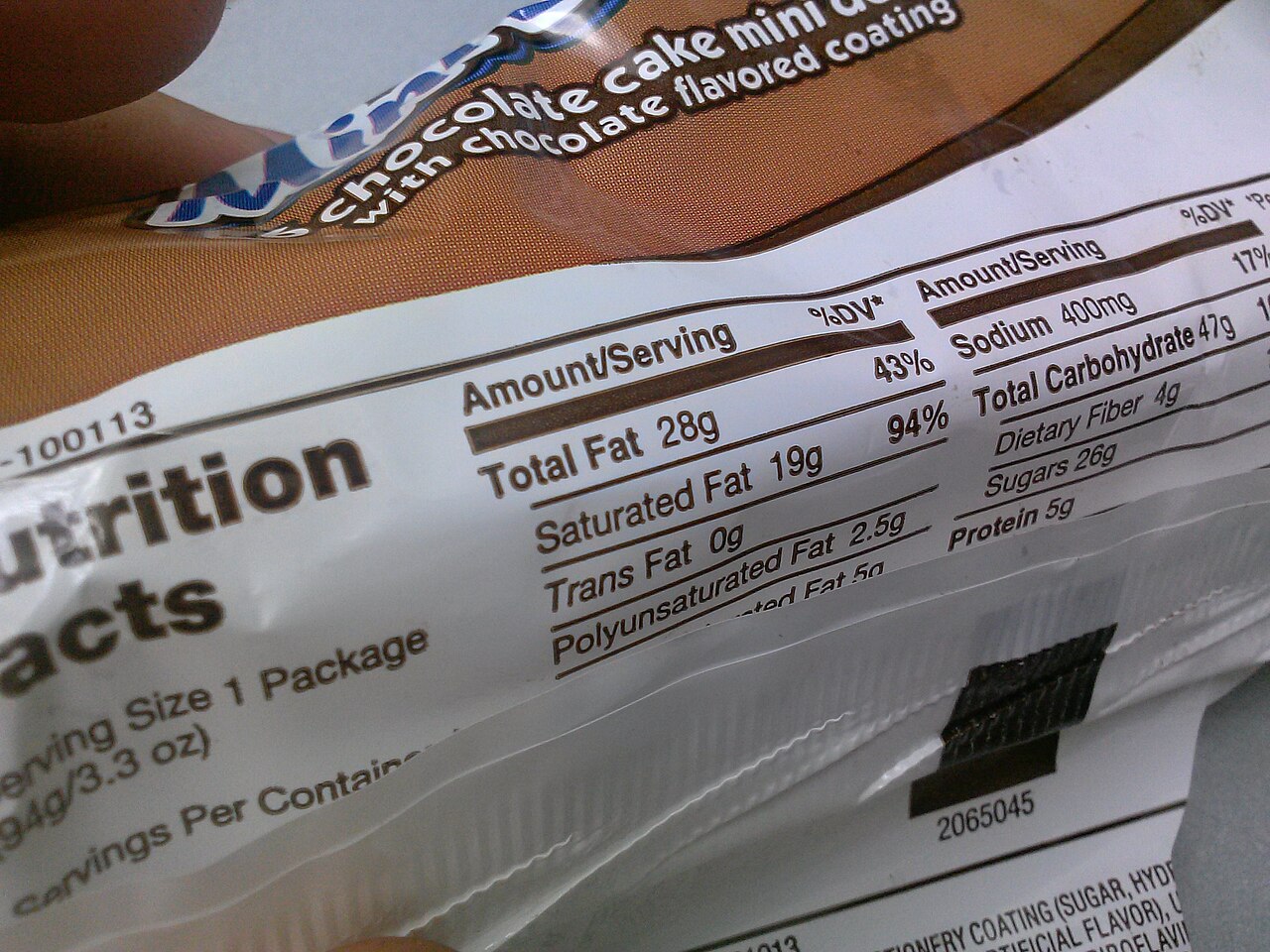

The comprehension gap is old news, and still true
A 2005 systematic review of consumer understanding and use of nutrition labelling already documented the core problem two decades ago: presence of a label is not the same as comprehension of it, and comprehension is not the same as behaviour change [3]. That three-way gap — presence, comprehension, use — is the frame the rest of this field still works within, and it is the frame most "does labelling work" coverage collapses into one question.
A 2017 scoping review on health literacy, literacy, numeracy and nutrition label understanding sharpened this further: general literacy and health literacy predict label comprehension, but numeracy — the ability to actually work with percentages and per-100g comparisons — is the stronger and more specific predictor [15]. A label full of numbers is, unsurprisingly, a numeracy task before it is a nutrition task.
Format changes what people can extract, not just what they notice
| Label format | What comprehension research shows |
|---|---|
| Plain numeric panel (text only) | Lowest comprehension for at-a-glance judgements; requires numeracy and time |
| Traffic-light (red/amber/green) | Faster, more accurate at-a-glance categorisation in comparative trials |
| Single-letter score (e.g. Nutri-Score) | Fast categorisation; can misfire on the specific edge cases the underlying algorithm handles per-100g |
| Warning labels (e.g. octagon/stop-sign) | High immediate recognition; effects on purchase intention studied separately from comprehension |
A randomised trial investigating the one-week effect of traffic-light nutrition labelling on diet selection among Japanese university students is a useful data point here specifically because it isolates format rather than just measuring "labelling versus none [4]." A separate Brazilian randomised experiment comparing two front-of-package label designs found that design choice measurably changes how quickly and accurately people extract the intended information — not just whether they glance at the label at all [7].
Numeracy and time pressure matter more than motivation
A study of time preference and nutrition label use, using data from China, found that how much weight people give to future health outcomes versus immediate gratification predicts whether they engage with a label at all — a reminder that comprehension research keeps finding that motivation to read carefully is not the bottleneck for a meaningful share of shoppers [18]. Time pressure at the shelf compounds this: a label that requires arithmetic to interpret is a label most people will not do arithmetic for, however literate they are in principle.
This is the empirical case for simplified, colour- or letter-coded systems over the plain numeric panel: they move the interpretive work from the shopper's numeracy to the label designer's algorithm. It is also the empirical case against assuming a redesigned label alone fixes anything — an Italian randomised controlled trial testing different front-of-pack nutrition label formats, and a French randomised trial testing the effect of displaying Nutri-Score in food advertising specifically, both found format-dependent differences in comprehension and stated purchase intention, not uniform gains from any label existing [5][10].
Comprehension does not automatically produce behaviour change
A 2018 meta-analysis on the effect of nutrition labels on dietary quality among college students, and a review on the influence of front-of-package nutrition labelling on consumer behaviour and product reformulation, both point to the same asymmetry covered on our Nutri-Score page: comprehension effects are larger and more consistent than purchasing effects [2][14]. People can correctly interpret a label and still buy the less healthy option for reasons the label was never going to address — price, taste preference, habit, what is actually in the cupboard. A French randomised controlled trial on the impact of the Nutri-Score front-of-pack label found purchasing-intention effects that were real but consistently smaller than the comprehension gains reported in the same literature [8].
What this means practically
Comprehension research supports three narrow, defensible conclusions rather than one sweeping one. First, format matters independently of content — the same information presented as a letter grade, a colour code, or a numeric panel is not equally usable by the average shopper. Second, numeracy is the more specific bottleneck compared with general literacy, so simplified formats disproportionately help lower-numeracy shoppers rather than everyone equally. Third, and most important for policy debates: solving comprehension is a necessary but not sufficient step toward changing what ends up in the trolley.
Common questions
Do most people actually understand nutrition labels?
Is a traffic-light label easier to understand than a numeric panel?
If I understand a label, will I actually buy the healthier option?
Does label design affect different label formats differently across countries?


Related reading
References
Every citation below links to the original peer-reviewed record on PubMed or via DOI. Nothing here is a substitute for medical advice.
-
Effect of front-of-package nutrition labeling on food purchases: a systematic review An R, Shi Y, Shen J, et al. · Public health · 2021 · Systematic review DOIPubMed 33517247
-
Effect of nutrition labels on dietary quality among college students: a systematic review and meta-analysis Christoph MJ, An R · Nutrition reviews · 2018 · Meta-analysis DOIPubMed 29373747
-
Consumer understanding and use of nutrition labelling: a systematic review Cowburn G, Stockley L · Public health nutrition · 2005 · Systematic review DOIPubMed 15705241
-
Investigation of the 1-week effect of traffic light nutrition labeling on diet selection among Japanese university students: a randomized controlled trial Wakui N, Matsuoka R, Ichikawa K, et al. · BMC public health · 2024 · Randomised controlled trial DOIPubMed 38317163Full text
-
A randomized controlled trial to test the effects of displaying the Nutri-Score in food advertising on consumer perceptions and intentions to purchase and consume Courbet D, Jacquemier L, Hercberg S, et al. · The international journal of behavioral nutrition and physical activity · 2024 · Randomised controlled trial DOIPubMed 38622707Full text
-
Effectiveness of a Sodium-Reduction Smartphone App and Reduced-Sodium Salt to Lower Sodium Intake in Adults With Hypertension: Findings From the Salt Alternatives Randomized Controlled Trial Eyles H, Grey J, Jiang Y, et al. · JMIR mHealth and uHealth · 2023 · Randomised controlled trial DOIPubMed 36892914Full text
-
A comparative assessment of two different front-of-package nutrition label designs: A randomized experiment in Brazil Khandpur N, Amaral Mais L, Bortoletto Martins AP · PloS one · 2022 · Randomised controlled trial DOIPubMed 35385504Full text
-
The impact of the Nutri-Score front-of-pack nutrition label on purchasing intentions of unprocessed and processed foods: post-hoc analyses from three randomized controlled trials Egnell M, Galan P, Fialon M, et al. · The international journal of behavioral nutrition and physical activity · 2021 · Randomised controlled trial DOIPubMed 33731145Full text
-
Nutri-Score: The Most Efficient Front-of-Pack Nutrition Label to Inform Portuguese Consumers on the Nutritional Quality of Foods and Help Them Identify Healthier Options in Purchasing Situations Goiana-da-Silva F, Cruz-E-Silva D, Nobre-da-Costa C, et al. · Nutrients · 2021 · Randomised controlled trial DOIPubMed 34959887Full text
-
Effectiveness of Different Front-of-Pack Nutrition Labels among Italian Consumers: Results from an Online Randomized Controlled Trial Fialon M, Egnell M, Talati Z, et al. · Nutrients · 2020 · Randomised controlled trial DOIPubMed 32752021Full text
-
Do nutrition labels influence healthier food choices? Analysis of label viewing behaviour and subsequent food purchases in a labelling intervention trial Ni Mhurchu C, Eyles H, Jiang Y, et al. · Appetite · 2018 · Randomised controlled trial DOIPubMed 29191745
-
Impact of Different Front-of-Pack Nutrition Labels on Consumer Purchasing Intentions: A Randomized Controlled Trial Ducrot P, Julia C, Méjean C, et al. · American journal of preventive medicine · 2016 · Randomised controlled trial DOIPubMed 26699246
-
Nutrition labels decrease energy intake in adults consuming lunch in the laboratory Temple JL, Johnson K, Recupero K, et al. · Journal of the American Dietetic Association · 2010 · Randomised controlled trial DOIPubMed 20630169
-
The Influence of Front-of-Package Nutrition Labeling on Consumer Behavior and Product Reformulation Roberto CA, Ng SW, Ganderats-Fuentes M, et al. · Annual review of nutrition · 2021 · Review DOIPubMed 34339293
-
Health literacy, literacy, numeracy and nutrition label understanding and use: a scoping review of the literature Malloy-Weir L, Cooper M · Journal of human nutrition and dietetics : the official journal of the British Dietetic Association · 2017 · Review DOIPubMed 27731526
-
Correlates of nutrition label use among college students and young adults: a review Christoph MJ, An R, Ellison B · Public health nutrition · 2016 · Review DOIPubMed 26549218Full text
-
Food and the consumer: could labelling be the answer? Kerr MA, McCann MT, Livingstone MB · The Proceedings of the Nutrition Society · 2015 · Review DOIPubMed 25998678
-
Time preference and nutrition label use: Evidence from China Guan L, Huang Z, Jin S · Economics and human biology · 2022 · Journal article DOIPubMed 36116174
-
The understanding, attitude and use of nutrition label among consumers (China) Song J, Huang J, Chen Y, et al. · Nutricion hospitalaria · 2015 · Journal article DOIPubMed 26040385